
This spring I started training to be a volunteer docent (tour guide) at the Arnold Arboretum (“of Harvard University” for its full name.) The 281-acre, world-class “living museum” is one of Greater Boston’s greatest features, in my opinion. As part of the training, I wrote a short paper about a tree in their collection. Read it below.
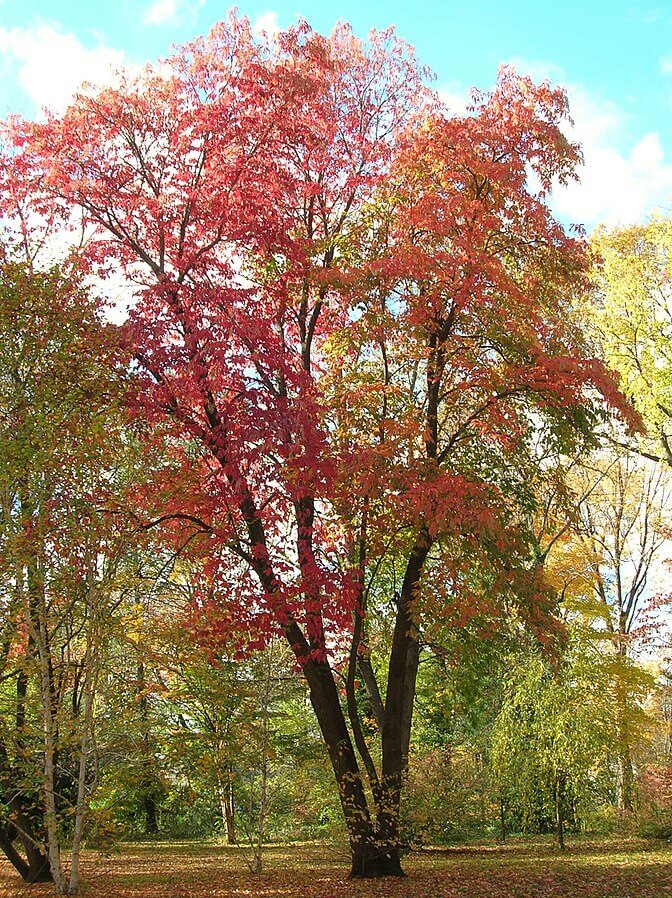
The scientific name of this tree is oxy- (sharp, pungent) –dendrum (tree) arboreum (tree), translating neatly to “Sour-wood tree.” You might think that “oxy” has something to do with air. It does, but the prefix “oxy” only came to be part of “oxygen” through an erroneous early belief. European scientists once incorrectly thought that oxygen was key to the formation of acids, so it was coined oxygène in French.
Sourwood belongs to the Ericaceae family, also known as the heath, heather, or (less often) blueberry family. It is a global, morphologically diverse family that includes more berries, like huckleberry and cranberry, shrubs like the popular rhododendrons, and herbs such as the exquisite monotropes. Sourwood is the lone species in the Oxydendrum genus.
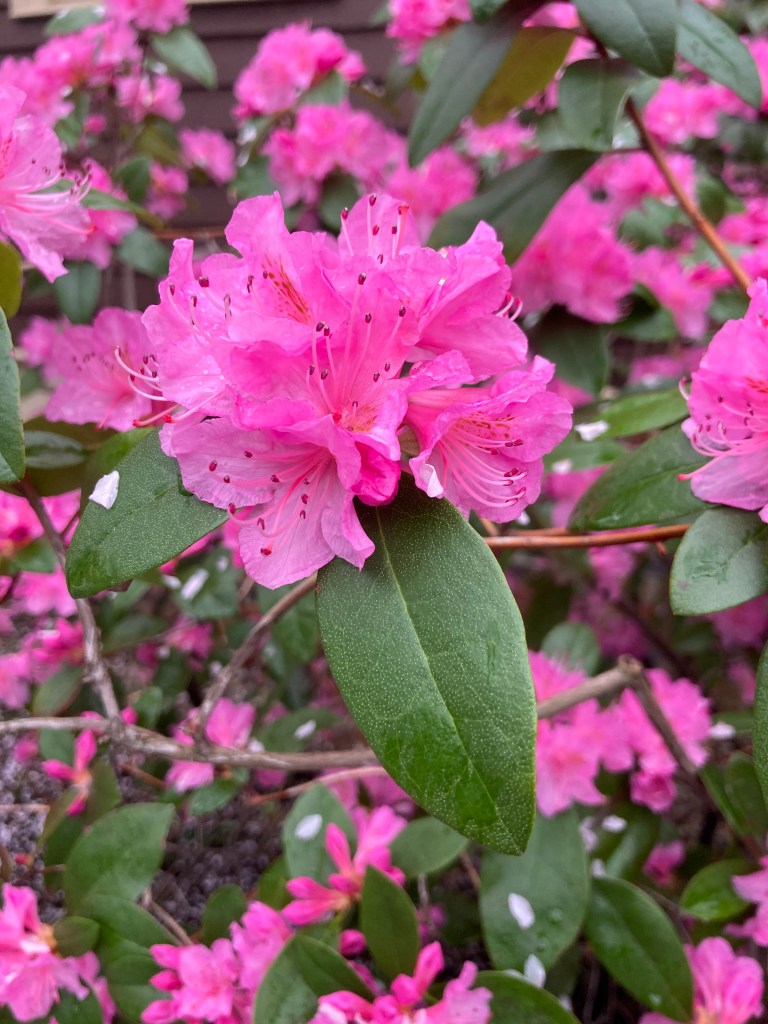

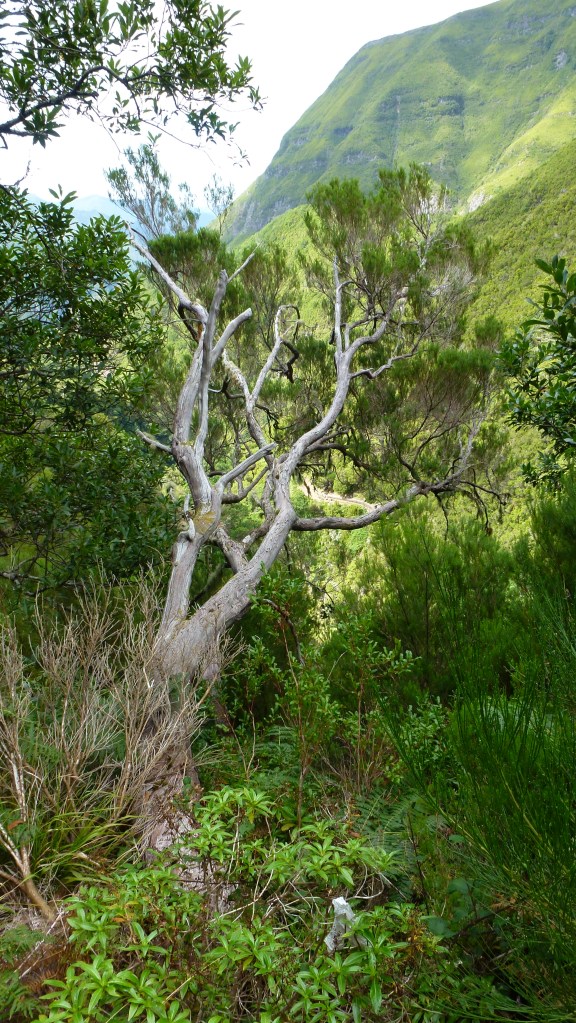

The sourwood tree is named such not because its wood is sour, but because the leaves taste sour—some liken it to sour apples. That’s also why it’s called sorrel tree. The leaves are 4-7 inches long, simple, alternate, somewhere between elliptical, linear, and lanceolate. They are glossy green on the top, perhaps harking to the common, but by no means unanimous, family tendency towards evergreenness.

Sourwood thrives in acidic, nutrient-poor soils, a major family trait. Gardeners might recall this from the care of rhododendrons and blueberries. Is the sour soil it grows in related to the sour leaves of the sourwood? I couldn’t find a definitive answer, but I’m leaning towards “not very directly, but it probably doesn’t hurt.” Sourness in the leaves may also be an adaptation to reduce predation.
In contrast to its acidity, this tree is also known for a sweet reason. Sourwood honey, produced by bees who frequent sourwood flowers, is well known in Appalachia. It’s known for being exceptionally flavorful, and described as having notes like “spicy gingerbread.”

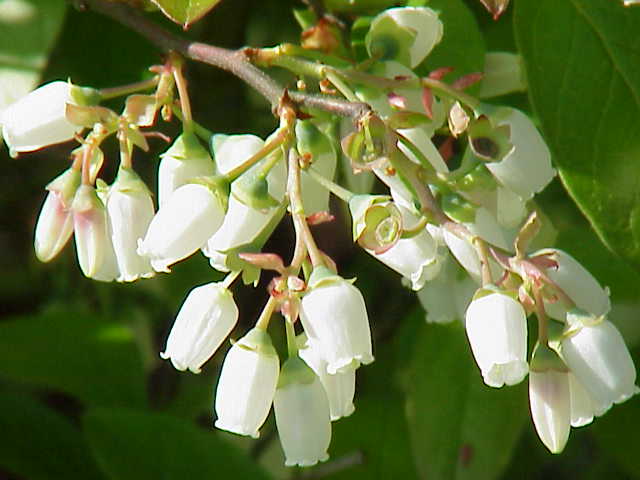
Since this is a tree loved by bees, it’s easily guessed that the sourwood has attractive flowers. It’s also called lily-of-the-valley tree because it bears bell-shaped, hermaphrodite flowers on long, upward-curving stalks (racemes) 5-10 inches long. The racemes grow together in panicles at the tips of branches. The gracefully drooping lines of the flowers, leaves, and branches combine to make a charmingly pendulous appearance all-around.

The flowers bloom relatively late, starting in late June. Donald Peattie points out that this timing is fortuitous, since it is after the flowering period of the mountain laurel and rhododendron, which contain toxins that poison their honey. While grayanotoxins have been measured in North American honey, I was not able to find any recorded cases of “mad honey” poisoning caused by North American honey in my quick search. Almost all known cases are caused by honey from Turkey, where rhododendrons grow densely enough to lead to dangerous levels of the toxin in some beehives.1
The persistence of the white flowers into early autumn make for stunning sight as the leaves turn scarlet. This makes it an attractive tree to add multi-season interest to a landscape.


The bark is nice to look at as well, developing deeply furrowed, platy ridges in maturity. Jerry Reynolds of the North Carolina Museum of Natural Sciences points out that its tendency to lean (rather than grow straight up) leads to an elliptical (rather than circular) trunk cross-section: the trunk is wider along the leaning direction, as that’s where it needs more support. Smart! This lean, and the corresponding ellipticity can be pronounced.
Sourwood is found natively in the Southeast, centered on the western Great Smokies in Tennessee. It does not natively reach as far north as Massachusetts, but can do well in zone 4 climates if it is in a protected location. The Scott Arboretum calls it a “criminally underplanted tree.”

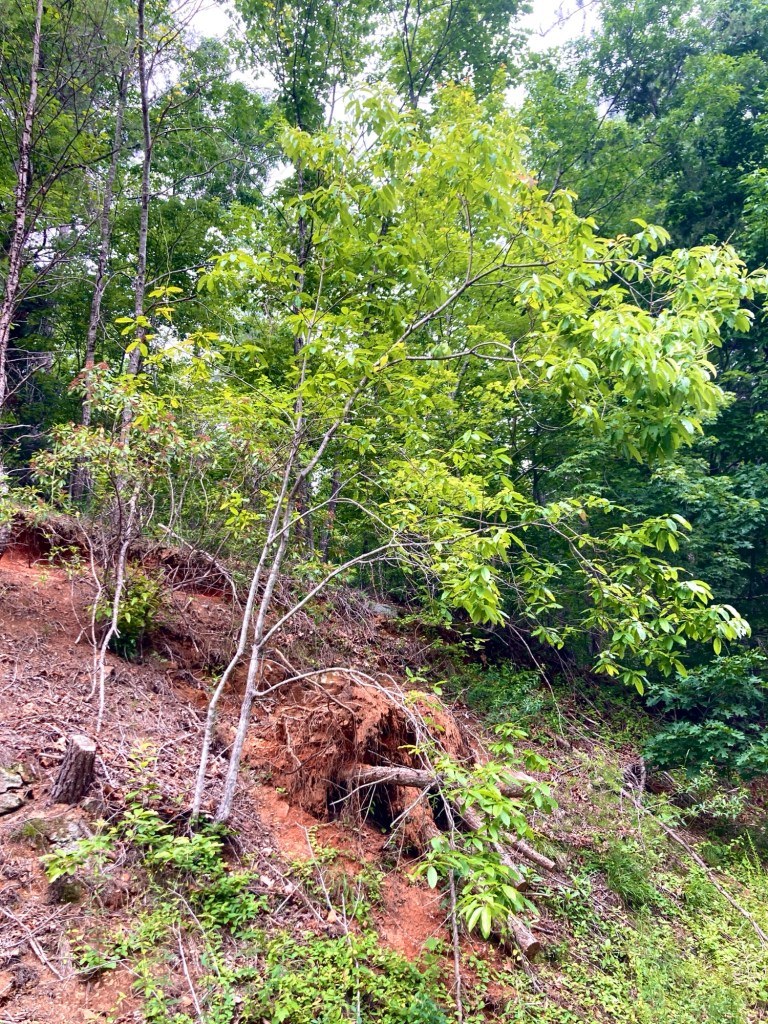
It is a small understory tree, typically reaching heights of 20-50 ft, and exceptionally 80 ft. The largest known specimen measured 118 feet tall. As I biked through the Blue Mountains, I saw it abundantly along roads, a vast majority less than 3 inches in diameter. Due to its small size and not particularly fast growth, sourwood has escaped the attention of the lumber industry. However, historical records show that sourwood has been used on a small scale for tool handles, arrow shafts, and for carving. It is fine-grained, of moderate hardness and elastic modulus, and dries without much splitting. More on that in this great post by Jeff Cupp, from which the below images of lovely Sourwood tool handles come from.


Sourwood’s moderate density also makes it moderately good firewood, and it burns fairly cleanly.2
In “Cherokee Plants: Their Uses—A 400-Year History” by Hamel and Chiltoskey, sourwood is listed as having been medicinally used by Cherokee and Catawba people for a variety of purposes, including regulating menstrual flow, relieving gastrointenstinal distress, and as a tonic for lung diseases.3
While it is not a common landscaping tree in the Northeast yet, it’s worth keeping an eye out for the sourwood, which might catch your attention with its unique flowers or fall coloring. The Arnold Arboretum has twenty-one sourwood trees scattered throughout. One is just behind the Hunnewell Visitor Center.4
I especially look forward to seeing it in the epicenter of its native habitat on my upcoming trip south. It will be an experience worlds apart from seeing it planted in isolation. It is unfortunate that I will be too early to see it in bloom, but it should be starting to leaf out, which will make it much easier to identify in the understory.
If you want to hear more about trees from me, I am hosting a free tree walk at the Somerville Growing Center this Friday evening. Info here
- https://pmc.ncbi.nlm.nih.gov/articles/PMC3404272/#CR23 ↩︎
- https://www.wood-database.com/sourwood/ ↩︎
- http://naeb.brit.org/uses/search/?string=oxydendrum ↩︎
- You can locate them using this map: https://arboretum.harvard.edu/explorer/ ↩︎
Discover more from evoiding
Subscribe to get the latest posts sent to your email.
 evoiding
1 comment