I’m so excited to share the first issue of my new monthly newsletter, the Beantown Digest. This will be an email newsletter, separate from the email subscription to this blog, as it’s for Greater Boston-specific content. You can subscribe to the Beantown Digest here.
For this first edition only, I am putting it on my blog as a preview. If you like what you see, subscribe for future issues. With no further ado:
Beantown Digest
Issue #1, September 2023
Welcome | Is Haymarket sustainable? | Prioritizing | Allston Christmas | Call for classifieds | See me at XR Week of Rebellion | Next SustainaDinner: Fri 9/15
Welcome to the Beantown Digest
All aboard! Thanks for joining me at the Beantown Digest, a sustainability newsletter I’m launching to support my friends and neighbors here in the Greater Boston area. A few things led to this: I want to stay in touch with SustainaDinner guests, I want to share more local information, and I want to help people connect with each other (See “Call for classifieds” at the end for more on that). At the root of it, I want to help people experience the joy and fulfillment of ecological sensibility.
Why is it called the Beantown Digest? Boston is nicknamed “Beantown” (history), and I love beans. Beans are a wonder food when it comes to human and planetary health, rich in slow carbs, pRoTeiN, minerals, and sometimes, even some fats (thank you soybeans and peanuts). They replenish nitrogen in soil, last forever dried, cost very little, and make for delicious dishes. One day I’ll finish my Bean Manifesto.
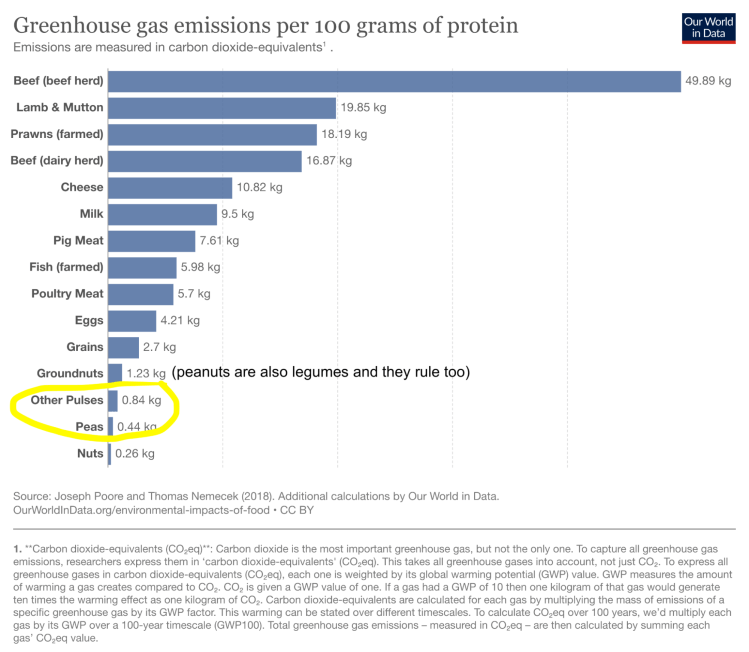
I use “beans” to refer to any legume; a broader definition than most. Technically, a legume is any plant in the Fabaceae family, and a pulse is the dried seed of any legume (I just looked this up). But “pulse” isn’t happening, as far as I can tell. So I say bean, sue me.


Although “Beantown Pulse” is nice and newspapery too, I like the more relaxed tone of “Digest.” We have a lot to digest, both complex carbohydrates and planetary crises. I hope to help!
Is Haymarket Sustainable?
To color myself a hypocrite, I don’t love “Is X sustainable?” headlines because the articles are often unthoughtful. It’s generally not a yes or no question. Yeah, true sustainability is hard to find. Yeah, it’s not always clear cut. But that doesn’t excuse just slapping together a smattering of facts with no real analysis or guidance and calling it an article. The headline is effective though. What I really mean is “how sustainable is shopping at Haymarket?”
For those unfamiliar, Haymarket is a hundreds-of-years old open-air market in Boston, where vendors set up stalls to sell produce for dirt cheap every Friday and Saturday (nice documentary). Sometimes I hear tourists call it a “farmers’ market.” One look at the prices (and the avocados) and you know it’s not. The vendors buy produce that is nearing its best-by date from wholesale distributors a few towns up, at a huge markdown. I’ve most often enjoyed 6/$1 oranges in the winter, 8/$1 limes, 2/$1 avocados, and pears.
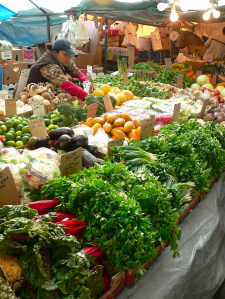

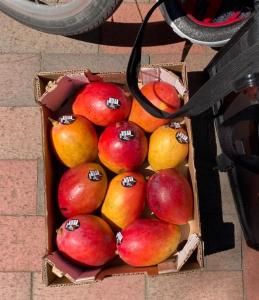
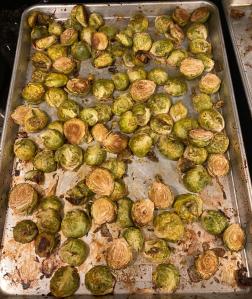
Despite Boston’s apparent ban on retail plastic bags, Haymarket vendors hand out plastic bags for every purchase. That’s easy enough to avoid for most produce: I say “no thanks” every time, putting the produce directly in my bag after I’ve paid, and that’s never been a problem. Once I brought my own bag for fava beans, but I generally just don’t bother with by-the-pound produce. Some products are prepackaged in plastic, like the famously cheap clamshells of berries, as well as grapes, bagged greens, and random packaged items like oat creamer and cheese.


I had a discussion with my housemate recently about plastic-packaged berries from Haymarket. My perspective was that buying anything in plastic, no matter how cheap, is supporting plastic production to some degree, and helping liquidate the produce perpetuates wasteful supply chains. He countered that Haymarket vendors buy produce that’s about to go bad so it doesn’t really affect wholesalers’ supply strategy. In terms of price and quality, Haymarket falls between a grocery store and the dumpster behind the grocery store (I don’t mean that as an insult at all), which makes the waste causality fuzzy. Ultimately, I continue to abstain from buying plastic-packaged food at Haymarket. Berries are tasty and healthy, but so are other foods, like oranges, apples, red cabbage, beets, carrots, etc. I like my habit of avoiding plastic-packaged groceries, and habits are powerful.
Prioritizing
It can be easy to get overwhelmed by how many sustainability tips and tricks and little fixes there are to do. Overwhelm is bad when it leads to doing nothing/virtually nothing, or doing too much too fast (see the extensive research on lasting behavior change). When I talk to people about avoiding plastic, I try to emphasize food packaging as the #1 thing to avoid. Packaging is the #1 source of plastic waste in the U.S. and while it’s good to reduce plastic packaging in all its forms, my guess is food packaging is the biggest source of plastic waste for most people. You can see for yourself: paw through your trash and recycling (because it’s safer to just count recycling as trash for these purposes) at the end of the week and see what you find. Or better yet, catalog it in detail for several months. So my recommendation is to start with plastic food packaging. To borrow a popular word from the effective altruism vocabulary, it makes sense to focus on the most tractable areas first.
Allston Christmas
September 1st needs no introduction, fellow Bostonians and Boston-adjacents. A day to contemplate the bizarre way people treat material goods. It strikes me as very wrong how something as important as a bed (the thing you spend like a third of your time on!) can be worth so little that the streets are littered with them. Especially those fucking Linenspa mattresses from Amazon, I can spot those from a mile away thanks to the teal edges. Now that’s a boatload of textile waste. Sure, the city recycles them, but recycling is a far cry from reducing.

I implore folks to consider buying used mattresses (from trustworthy people, of course) instead of new. Way too many pristine mattresses are discarded after only a tiny fraction of their usable lifetime. Those things are full of plastic foam and plastic fabric, and in case you needed a reminder, plastic recycling is nowhere near solving the plastic problem.
It’s disheartening to see the volumes of trash put out, but it’s also a good wake up call to how unsustainable purchasing habits are and how much excess stuff there is. I take what I can use.
Classifieds
I’d like to open this section to friends and friends of friends and maybe even their friends. Got a question about living more sustainably in our little corner of Massachusetts? An offer for help? A suggestion? Let’s help each other out. Here’s a couple by me:
[Emily | Somerville ] I’m traveling down south to learn cob building this fall. It’s a building technique using natural materials (mud, sand, straw) to make beautiful, performant, and sustainable houses. I’m gauging interest for a Greater Boston cob workshop: if you’d want that to happen and/or know of a property owner who might like a nice custom (free) garden wall, bench, or shed, please contact me.
[Emily | Somerville ] I’m experimenting with rice vinegar brewing because no one sells zero-waste rice vinegar here. Want some? What if we started a lil rice vinegar co-op akin to the Somerville Yogurt Co-op… Reply to this email to contact.

Contact me to submit a post for next month’s newsletter. It could be anything, as long as it supports sustainability (I reserve the right to not publish anything I don’t want to). Just jot down a couple sentences, and leave contact info if you want. If you don’t want to publish your contact info, say “forward responses”, and I’ll send you the contents of any responses to your classified. That’s right: I’m reinventing social media. Slow, inefficient, unscalable social media. 😎
XR Week of Rebellion: Find me at the Festival!
The Boston Extinction Rebellion Week of Rebellion is coming up. At the end of it is the celebrative “Festival for a Future” on Saturday, September 23rd at 2:30pm at Cambridge Common (near the Harvard T stop) (link). I’ll be tabling to freely offer the Spodek Method/Authentic Intrinsic Motivation sessions to attendees. The rest of the festival will be pretty awesome as well I think! If you’ve done the Method with me and would like to tag along, let me know.
Next SustainaDinner: Friday Saturday 15th
The eighth(?) SustainaDinner is coming up next Friday the 15th. For those new to it, it’s a sustainability dinner party I started as a project from the This Sustainable Life workshop, and has now blossomed into an event I love hosting and look forward to every month. Good vibes, delicious vegan food, new friends. 6pm to help cook, 7pm to eat. The only admission criteria is that sustainability matters to you (and don’t bring anything in plastic!). Reply to this email for details and to RSVP! Oh, and please, someone help me remember to take pictures. I always forget.
That’s it folks,
Thanks for reading and I hope you enjoyed it! Know anyone else who’d enjoy it? I’d be delighted if you shared the subscription page https://evoiding.com/the-beantown-digest/
Until next time!
You know how to reach me! Comment here, my email/number, or use the subscription form as a private message.
Discover more from evoiding
Subscribe to get the latest posts sent to your email.
 evoiding

