
I had just gotten back from my big trip when the farm I volunteer at asked for someone to take the lead on food/catering arrangements on their annual humble harvest celebration. This was an up-to-50-person event: no small fry, and it would be the biggest audience I’d cooked for yet, if I did. So of course, I said “I’ll do it!”
For me, sharing food is a wonderful way to share some of the things I’m passionate about in life: health, vegetables, beans, and caring about the world. I looked forward to coming up with a menu that would help celebrate the farm and its harvest, and further exhibiting how delicious and satisfying it can be to cook with local and regional foods, almost zero packaging, and zero animal products.
Alternate wording: I was pumped to play chef and push my vegan zero-waste agenda on up to fifty people. 🙂
Even though we had the budget to buy prepared food, it was a far less appealing option to me, and costed more on top of that. Given our and my farm-to-table aspirations, the obvious choice was to do the cooking ourselves.
With only two weeks to go, there wasn’t much time to waste. Commence planning! To start with: the menu. From the farm, we had a variety of kale, lettuce, and squash, as well as the ever-overflowing Swiss chard, carrots, peppers, sweet potatoes, beets, scallions, garlic, onions, turnips, and more. I mulled this over and came up with some bean stew and salad ideas.
A week in advance, I biked to the farm after work to help pick out and set aside some of the produce we would use for the lunch.
I also made a trip down the street to Elmendorf Baking, a local baking supply shop and cafe. They stock a variety of regionally grown grains and beans, which I thought would be perfect for a farm-to-table-like menu. And even better, although they had packaged options, they also sold in bulk, customer-provided containers accepted. I asked the owner about the bean varieties they had in stock, and ended up going with seven pounds of Marfax beans, which are shaped like navy beans with a nice ochre color, from Maine. I’d never cooked this variety before but they sounded great.
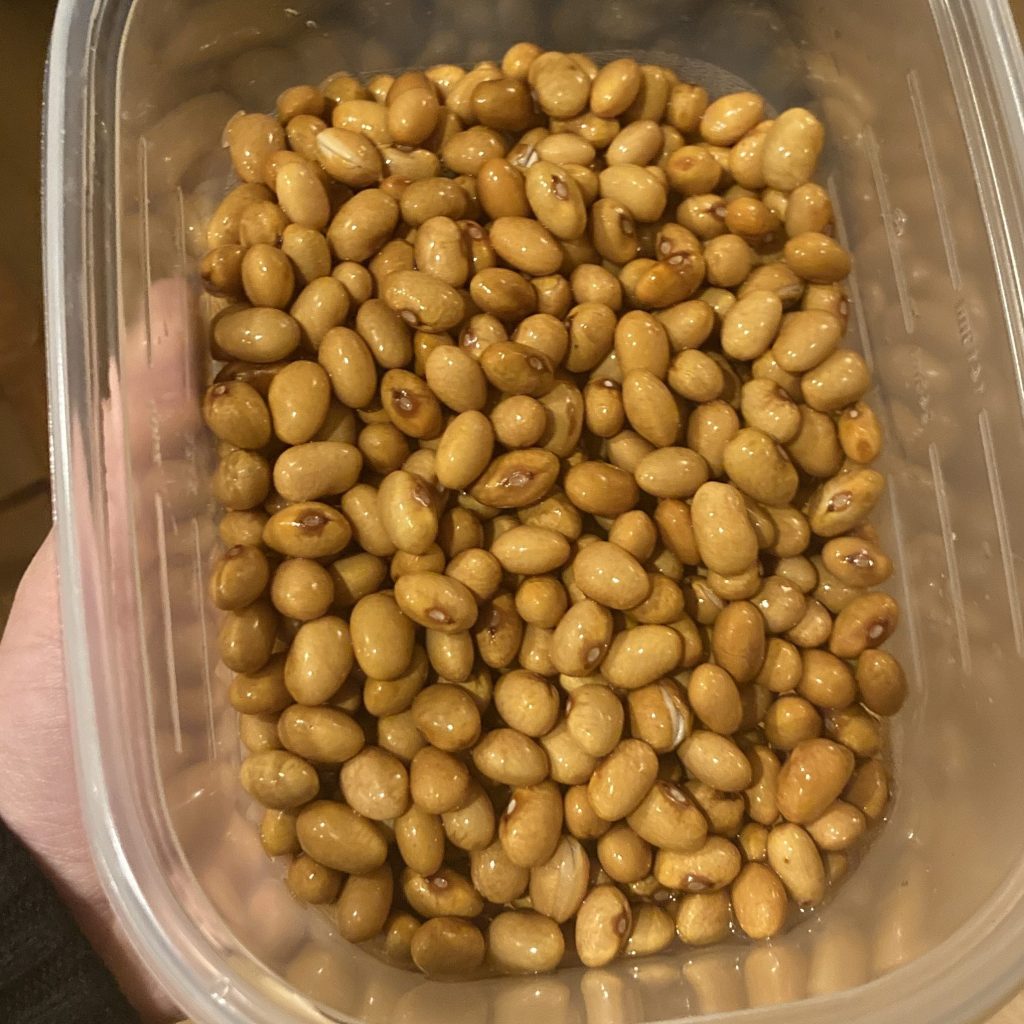
Two days before, I bought a used Instant Pot. Our tiny 3-quart model would be dwarfed by the amount of beans we had to cook, so for a very affordable price, I added the biggest Instant Pot, the 8-quart model, to our arsenal.
The day before, during my lunch hour, I biked to Arlington, where I was familiar with a pair of crabapple trees, and got picking for the dessert. The crabapples were even better than the last time I’d visited, a few weeks ago, as it was deeper into the season. They were still tart, as crabapples are, but had sweetened more with the cold.
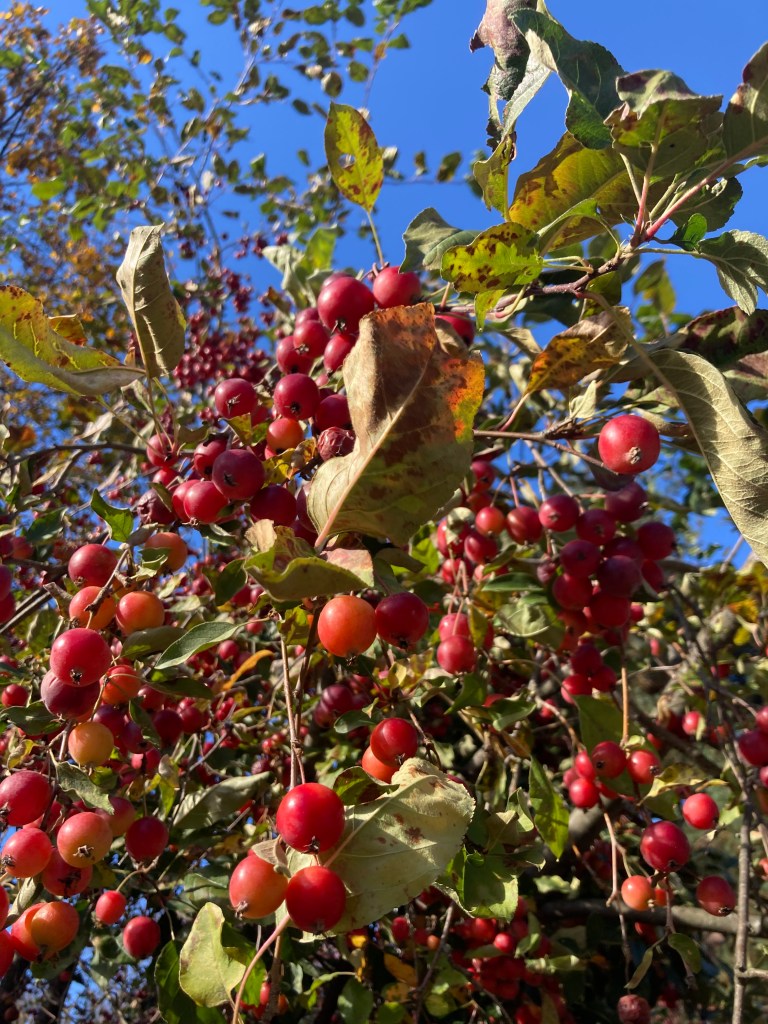
That night, I got home from work, had dinner, and commenced cooking, joined by my sous chef for the night, Tim. We were expecting about 35 people at the lunch, so the extra hands were very much needed.
It was a wild time. For nearly six hours it was a blizzard of cooking. Pots and pans and bins on every surface. So many tasks, some timed, going on at every moment. It was hectic yet organized, serious yet fun. My roommate who arrived home at midnight was confused to find us still cooking, and jumped into help as well.
Marfax Bean Vegetable Stew #1
This stew featured Marfax beans, onion and garlic, sweet potatoes, carrots, a mixture of squashes (acorn, autumn frost, and butternut), raisins, lemon juice, and ras el hanout, a blend that featured high proportions of cumin, paprika, and cinnamon. The vegetables were all from the farm, and the spices and raisins were purchased in our own containers from my favorite zero-waste friendly grocer.
Marfax Bean Vegetable Stew #2
Since we had to make multiple batches to make enough, we took the opportunity to make this batch slightly different. It was spiced similarly but with no hot peppers whatsoever to accommodate any heat-fearing guests, and added sweet peppers and swiss chard. No raisins. Generally speaking it was less ras el hanout-influenced.
4-Kale Salad
I was really excited to make a 4-kale salad. We had four varieties of luscious kale growing: curly, lacinato, red Russian, and red hellbore.

We washed, destemmed and ripped up endless bunches of kale, roasted a big pan of amazingly sweet beets, and mixed a blenderful of vinaigrette to massage the largest kale salad I had ever seen. Vinaigrette: balsamic vinegar, apple cider vinegar, a sparing amount of olive oil, salt. We had a jar of pepitas to sprinkle later, too. The gem-like color of the beets in the deep green and purple bed of kale was so beautiful to look at.

Vaguely Asian Lettuce Salad
This salad was to highlight our amazing fresh lettuce, as well as our hakurei turnips, a lovely crunchy round white turnip with a sweet and mild flavor. The dressing contained lots of fresh peeled ginger, orange juice we squeezed ourselves, my home fermented brown rice vinegar, tamari, and sunflower seeds. We also added carrots.
Maine-ish Baked Beans
Marfax beans are known for being a classic bean choice for baked beans in Maine, which I was delighted to read are a lot less sweet than Boston baked beans. These beans weren’t baked, they were pressure cooked. I added onions, some paprika, salt, and a little maple syrup, keeping it pretty simple.
I went to bed atrociously late, but it had to be done.
The next morning I got up and… kept cooking. I wanted to make one more thing: a crabapple crumble. My angelic sous chef had done the work of washing and coring what must have been at least a hundred crabapples last night, so all I had to do was bake. I chopped another seven big honeycrisp apples and mixed a crumble topping of oats, flour, brown sugar, cinnamon, and cinnamon’s friends. Into the oven it went in a sheet pan, looking vast.
The crumble done perfectly in time as the volunteer who’d offered to help drive the food over arrived not long after. We loaded up the car, and I made what I thought was a prudent but actually was a terrible decision of getting in the car to babysit the food on its way over. I’d never taken a car to the farm before, and unsure about both my carsickness and the environmental impact, I’d debated it back and forth for a while before making what turned out to be the wrong decision.
I was very nauseous, not only for the ride but for over an hour afterwards. The food made the trip perfectly fine without any more help from me so I was pretty chagrined about having put myself through that for nothing at all.
After we arrived (and I spent some time literally touching grass and trying to get my nausea down), we ran around setting things up, I put little description cards by my dishes, and people started arriving with various additional offerings.
When all the setup was done and the crowd had mostly arrived, words were spoken and the party was started! It was finally time for me to relax. Partially. I was naturally very eager to see and hear what people thought of the food.


I got some great feedback, which was nice. But the proof was in the pudding: at the end of the party, I critically checked all the dishes to see how much of a dent had been made in them all. I had slightly overprepared in total, since between the grill and all the additional food that had been brought but not organized through our central planning, we had more than we needed. But large amounts had been taken from all six dishes. Combining that with my heard and overheard feedback, I’d say that the baked beans, apple crumble, and kale salad were the biggest hits. Part of this I attribute to them being the more familiar dishes. The bean stew #1 had also been well-eaten, while stew #2 did a tad more poorly, probably because it was a little muddier in color and (in my opinion) a bit worse than #1. The crabapple crumble, perhaps the most conventional (aka unhealthy) tasting item, was almost all gone (lol). Overall, I was very pleased with the result. I’d delivered on my goal of making local-focused food that people would enjoy, which involved striking a balance between my personal tastes and those of others.
As I was serving myself, I realized another great perk of having formulated this food myself: I could (and wanted to) eat any of it! These days, although vegan options are more common than before, it’s pretty typical to for event food to be an unappealing situation for me. So it was pretty awesome to be able to make myself a plate of food, actual food, that I could eat, at an event, with other people. Cooking it yourself is one way to ensure that, haha. Enjoying it with others was super rewarding!
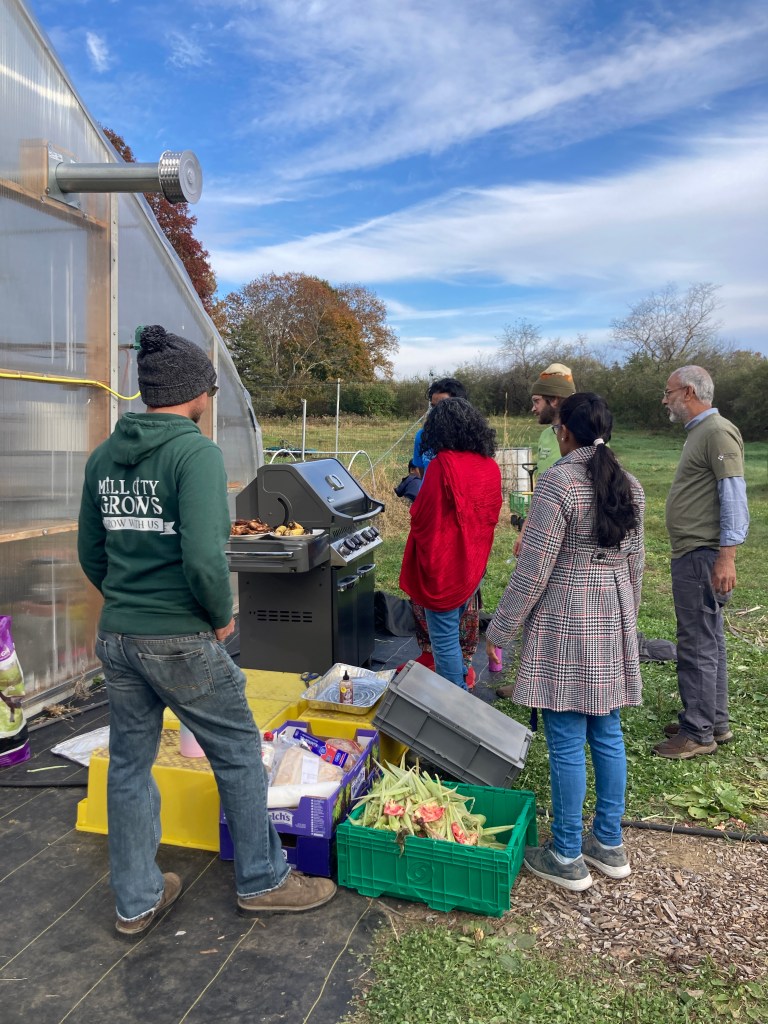
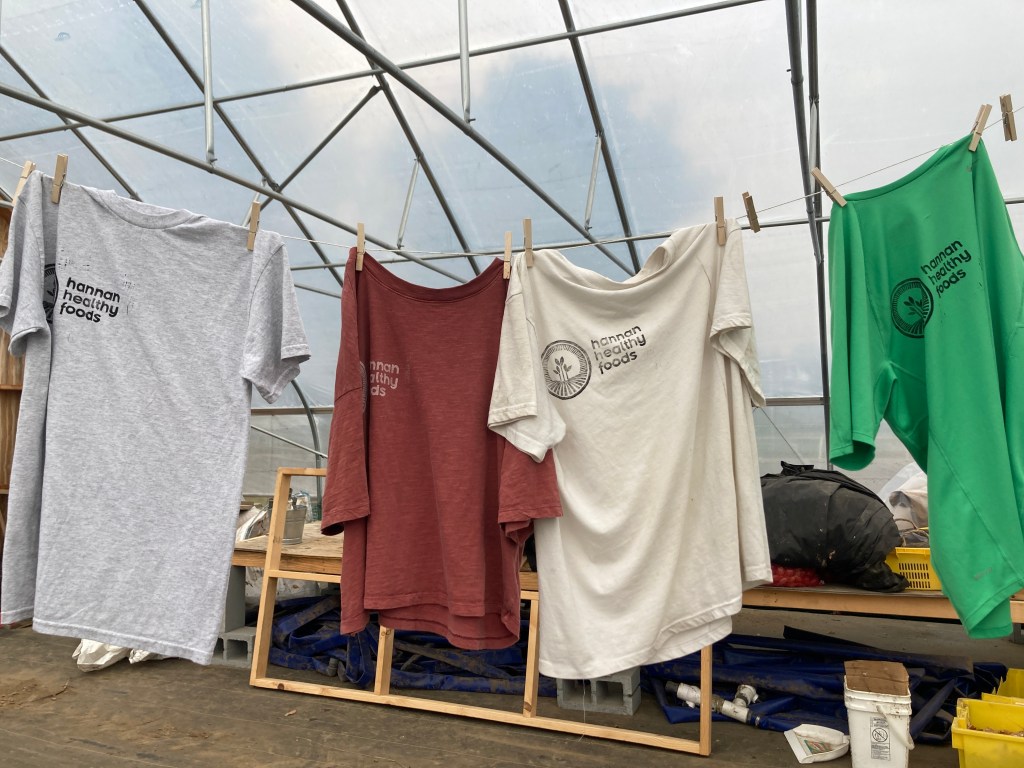
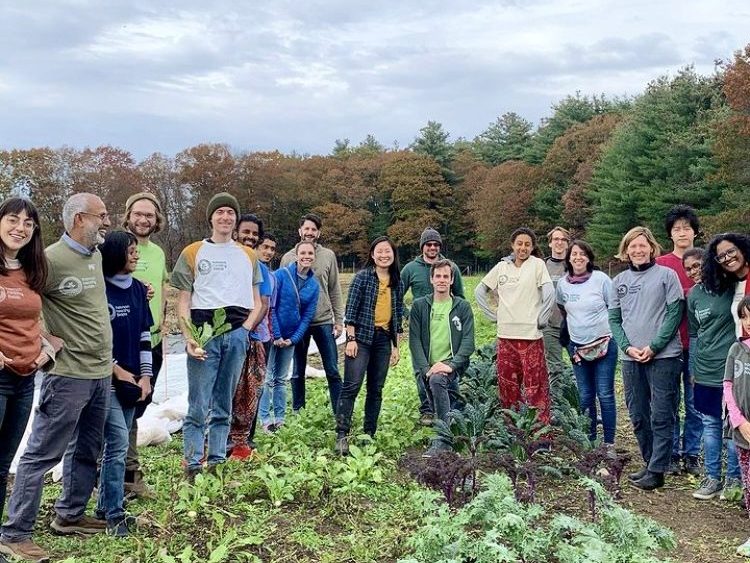
Some other highlights: grilled corn-on-the-cob, sublime. The other thing I was super proud about was the t-shirt printing activity that I coordinated with another volunteer, Andrew, to make happen. Back during the initial planning, the idea of getting shirts printed had floated up. I respun that want into a what is hopefully a lower-resource-consumption idea: what if we bought secondhand shirts and stamped the logo ourselves, potentially as a party activity, instead of ordering new custom-printed shirts? Andrew took that project on and did an incredible job of making the design, carving it into a wood block, and figuring out the wood block printing. We bought a pile of different shirts from Goodwill a couple days before, he printed them in advance, and I also sent out a message to attendees to bring a shirt to print if they wanted.
The shirts turned out awesome and we wore them for the group photo. I think the variety of colors and patterns looked much nicer than a bunch of identical shirts would have, and it was also fun to watch people pick out which shirt they wanted.
I can’t leave out the weather, either: although it was overcast and a bit chilly in the morning, it was comfortable in the greenhouse where we ended up, and the sun came out later, making for a beautiful day.
All in all, a great experience with some of my favorite things: fresh organic produce, regionally sourced food, zero-waste, foraging, cooking and eating with friends, being outside, crafting, writing little display cards. I’d love to help make it even better next year.
For more info on lower-waste and more local food sourcing, check out my Boston resources page. If you’re local and interested in events like these, or being involved in anything I do like the above, check out my newsletter.
Discover more from evoiding
Subscribe to get the latest posts sent to your email.
 evoiding
Love this one! So inspiring. 😊
<
div dir=”ltr”>
<
blockquote type=”cite”>
LikeLike