
I’ve done several things my parents don’t love. Near the top of that list is bike touring, which has become an important part of my life in the mere two years since I started. They just don’t get why I would exert myself so much, put myself at the mercy of nature and man-operated vehicles, all to get places five times slower than a car.
I can explain that it makes me feel happy, capable, strong, alive, centered, and free. I can go into my whole theory of change and why changing our lifestyles is so freaking important. I can explain how riding highways out in rural America can feel safer than being in suburbia or even urban America. I can run through the long list of methods I use to bike defensively, dress for weather, and plan routes. But I’ve found that there’s people who don’t get it. So I don’t waste my time on futile lecturing. Some things, like that transcendental feeling of reckoning with yourself out in nature, you just have to experience.
Recently, while I was waiting for the train home after a 30-mile bike commute from Central MA, I realized something: The worst thing about biking is cars.
Think about that. Not the exertion. Not the cold/hot/rain/etc. Not mechanical issues, navigation, figuring out where to resupply and sleep, or even how long it takes. 90% of the downsides are due to the excess of cars and how the world has been (poorly) designed around them. If it weren’t for cars, the modern road would not be so dangerous, ugly, and polluted. I’m not saying bring back horses 100%, I enjoy the lack of horse poop. We have plenty of great alternatives today, even beyond bikes. E-bikes and e-motos that are responsibly operated and regulated, and the little-known but aerodynamic velomobiles would all be welcome to the party.
I like to imagine my dream world, where the country is covered by a network of bike-pedestrian paths, so plentiful that you can bike from just about anywhere to anywhere on bike-friendly roadways, without going much out of your way. How would that change the way we live? Dramatically, I think.

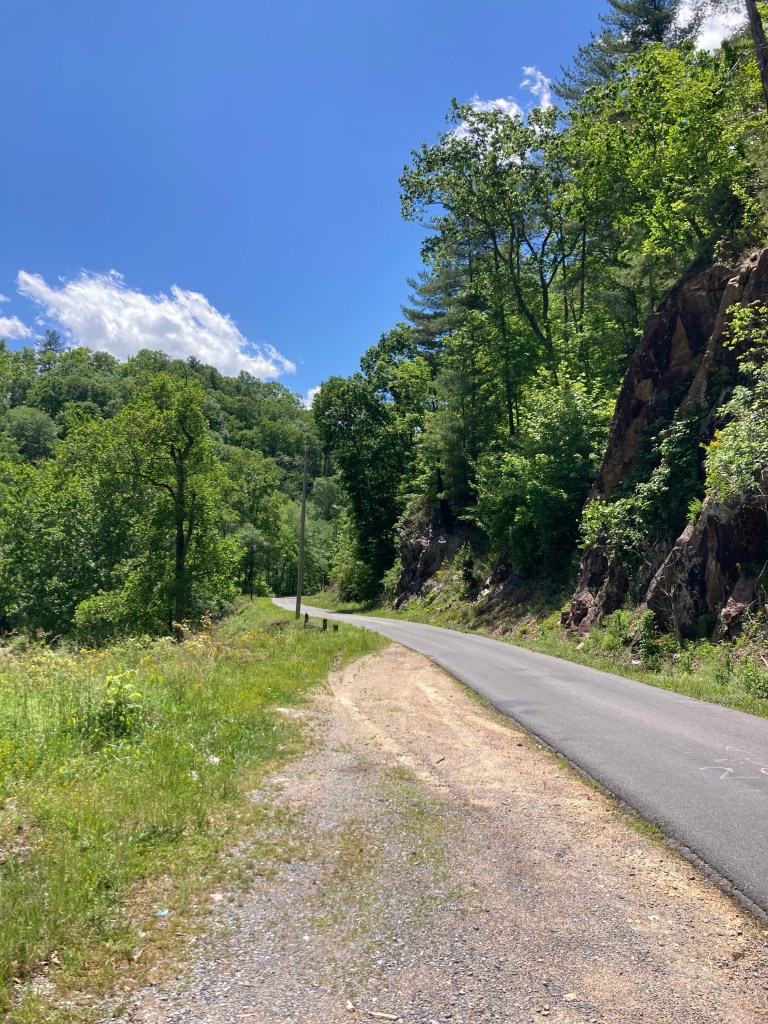
Bikeways funnel value towards local businesses, because people aren’t just blasting past at 70 mph in a small room that contains all their needs (except a toilet). Cyclists tend to make far more stops for food, water, restrooms, scenery, lodging, cool plants, and anything else that strikes their fancy.
Putting bikeways everywhere really isn’t that materially difficult, in the big picture. Mile for mile, bike-ped trails are vastly cheaper than car roads to build and maintain. They’re smaller. They can be dirt or gravel instead of pavement. The light weight of bicycles causes far less damage, requiring far less maintenance. Bikes don’t cause the noise and pollution that cars do, making it more pleasant for folks living nearby.
Abundant bikeways would encourage more civic engagement. Healthier lifestyles. Closer communities. Better stewardship of both the natural and built environment. Lower cost of living. More financial freedom. Happier, healthier people. What’s not to love?
Biking is safe. Cars are dangerous. Remember that!
But how dangerous it actually?
I did a little searching for statistics on fatality rates of drivers and cyclists. It’s hard to get a miles-to-miles comparison because of the way data is collected (They often present fatalities per capita, or lump together the fatalities of drivers and peds/cyclists. If someone wants to research this more, do share). But I dug up enough relevant numbers to get a very, very rough sense.
In the UK, biking is 10x more dangerous per mile than driving, . But one might guess that because I bike, I counter some of that factor by traveling fewer miles. After all, there’s only so much time I can spend riding, and unlike a driver, I can use trains to go long distance while bringing my personal transport device with me. Well, turns out that’s still a lot of biking. The average driver in the US drives ~14,000 miles a year. I estimate that I ride around 3000 miles per year, so ~5 times less far than the car (and very average for a recreational cyclist). That still leaves a difference in fatality of 2x, which is conveniently similar to the factor by which cyclists disproportionately die in road accidents in the U.S. (cyclists make up 1% of road users but 2% of deaths).
I can think of some more reasons to (perhaps wishfully) deflate my risk factor. It may be that by practicing cautious riding strategy, using visibility gear, doing a much of my big mileage in wide-open rural roads, and by being young (less likely to die from injuries), I push my own risk further below average. Somewhere from 1-1.5x as much as a driver sounds pretty acceptable to me.
I’ve thus far held off on mentioning the health benefits of cycling, because I think it’s important to look at the risk of the activity in isolation for clarity. But if you add in the overall effects of cycling on one’s whole life, and the fact that far more people die prematurely from living sedentary lifestyles than road accidents, I’d wager that that last factor of 2 (which describes just road-accident caused fatality, not overall fatality), goes to zero and maybe even flips to negative. Studies have shown a myriad of benefits to cycling, like a 21% decrease in all-cause mortality, 5x decrease in premature deaths among diabetics, and 26% decrease in cardiovascular disease when older adults began cycling. So while we are being disproportionately killed by cars, those of us who don’t probably live longer and healthier lives than we would have otherwise.
So my happy conclusion from this back-of-the-envelope calculation is that I’m not risking my life by biking—not any more than you are by driving or walking. Yay!

I’m not done yet, though. I feel like because bike touring is relatively uncommon and unfamiliar, people are biased towards thinking that it’s more dangerous than it is. On the flip side, there are dangerous activities that raise less eyebrows, just because they’re seen as “normal.” Getting pregnant (in the US) has a 0.03% risk of death. Nearly 200,000 Americans die from drinking alcohol per year. Meanwhile, the League of American Bicyclists estimates a 0.15% mortality rate to being a bicycle commuter. Not great, but hey, that’s about the same as… having five kids? Which is a lot, but I don’t think it’s very normal to go up to a pregnant person and say, “Hey, aren’t you worried that you might die?” We don’t say things like that, because we respect people’s autonomy (“We” being decent people).
No matter who you are, you’ve probably made a decision that slightly decreased your life expectancy, because you thought it was worth it. And we need to respect each other’s freedom to do that, as long as it’s not hurting other people.
An accomplished bike tourist I met in Vermont, who is retired and still touring, made some great points when our conversation inevitably turned towards “bike touring as a woman.” She told me that she’d never had a threatening experience in all her years of touring, almost always alone. We commiserated on how often people raise their eyebrows and ask us, aren’t we afraid of men? She pointed out that statistically, women are far more likely to be attacked by someone they know well than a stranger. It’s true: in the US, 87% of women murdered were murdered by people they knew, and 50% of women murdered were killed by their spouse or intimate partner. “Man or bear?” debate, step aside for “Boyfriend or bear?”
I realize that at least we feel that we have some control over the people we choose to be intimate with. We don’t have much control over what random strangers are on the street. But I think it’s fair to remind ourselves that a great majority of our personal wellbeing and safety is in our own hands. Yes, there are environmental and social factors that are hurting people against their will, and we need to work on that (hello, climate change). But we can’t help other people at our best if we’re paralyzed by overblown fears in our own lives.
The thing is, long before I ran the numbers, I had accepted that I might be putting myself in more danger than the average traveller by biking. I was okay with that, because my experiences made me feel safe enough for the value I got in exchange. Do you calculate your chances every time you climb into a car, walk on the sidewalk, or board a plane? Life is risk. Being born has a 100% risk of death. We just do different things in the time between.
There’s something to be said for doing things that bring you joy and help you live the life you want. It’s always what you “would die for” and “couldn’t live without” that are said to be the most important things in life. Life isn’t just about quantity of years, but quality. I believe biking extends both.
Discover more from evoiding
Subscribe to get the latest posts sent to your email.


Wow!! This is such a lucid discussion of this topic, and very moving too.
LikeLike
Occasionally people have expressed concern about me, biking on Rt 2A here, and reading the article. I realized that I’ve carried some of that worry, and I don’t really wanna take that on. People don’t tell drivers, “you know there are lots of car crashes every year, every time you get behind the wheel…“ And when I’m very old, I intend to have healthier bones than I have now even, and I might get a velomobile . I sense in my body where I was holding onto my reaction to the image that I felt got conjured when the person expressing concern voiced that to me, and I’m glad to have that awareness so that I can release that pattern of reaction and not choose to react that way in the future.
LikeLike
love this, Emily! Thanks for writing it 🙂
LikeLike
100% Agree, I love biking it saves me time, monbey and gives me exercise. I wish there were more bike paths through the countryside!
LikeLike