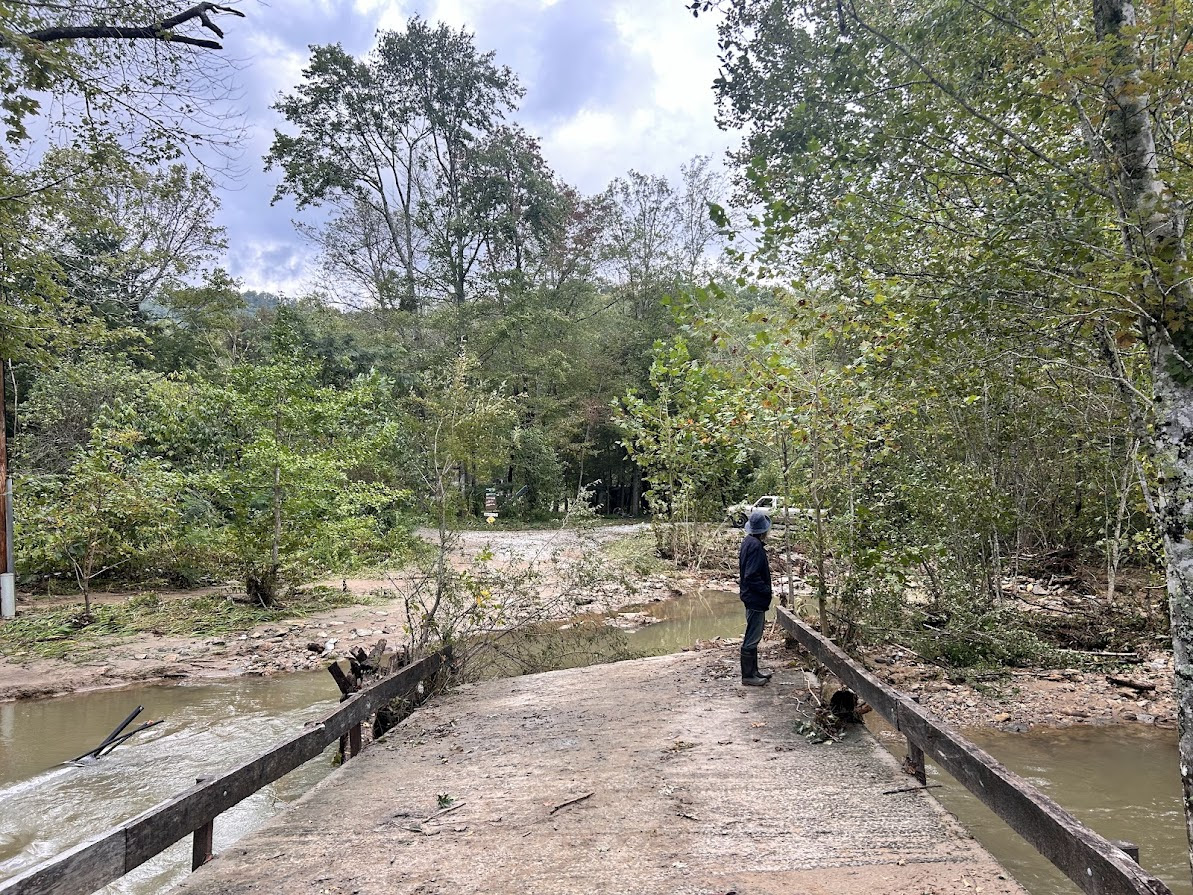
This time last year, I was biking through Western North Carolina and Eastern Tennessee, regions that have now been devastated by Hurricane Helene. It’s shocking to see pictures of charming mountain towns I recall riding through, now torn-up and buried by the flooding. One of those places is Earthaven Ecovillage, one of America’s longest-running (30… Continue reading Save America’s Ecovillage
Category: Economics
Stop Asking if It Scales

Point: “Big, global problems need big, global solutions. Big solutions spread fast, to lots of people: that is scalability. So scalability is a requirement for any solution that seeks to solve big problems.” Counterpoint: “Big, global solutions proposed are often ineffective, unfeasible, or counterproductive, because people and places are different. Any long-term solution is adapted… Continue reading Stop Asking if It Scales
Review: Motivating Pro-Environmental Behavior with Self Determination Theory
Social change is necessary for a sustainable society. But how can we best make this social change? This is the question that the pro-environmental behavior (PEB) area of psychology tries to answer. This paper combines two types of psychological theories to propose a refreshed theory of PEB and strategies to go with it.
Review: The Magical Thinking of Degrowth
This is a review of the blog post Degrowth: Solving the Impasse by Magical Thinking by Branko Milanovic. An exciting new activity—my first blog post about another blog post. Am I a degrowther? Maybe. I don’t think I’m well-versed enough yet on these matters to label myself with a position. But from what I’ve written… Continue reading Review: The Magical Thinking of Degrowth
Review: OECD Decoupling Indicators and Decoupling for Ecological Sustainability
The OECD defines “decoupling” as ” breaking the link between ‘environmental bads’ and ‘economic goods.’”1 To put it more vividly, this is generally understood as having economic growth happen without increased resource use and its associated environmental damage. An economy could get more decoupled by selling a more fuel-efficient car instead of an inefficient one,… Continue reading Review: OECD Decoupling Indicators and Decoupling for Ecological Sustainability
Reflection on Teaching “Energy and Human Ambitions on a Finite Planet”
In August, I taught a 7-session seminar series through Wave Learning Festival, a new student-founded organization offering free remote learning. This was an exciting new experience for me, as I’ve never taught before. I got to design my own course off of one of my favorite new books, Energy and Human Ambitions on a Finite Planet by Tom Murphy
Review: Energy and Human Ambitions on a Finite Planet
For a public steeped in both climate denialism and climate anxiety, this book is a fantastically grounded tour of “the situation.” Sure, it’s a textbook, but don’t mistake it for the outdated, prescriptive tomes of yore. This might just be the most exciting nonfiction I’ve ever read.
Review: Beyond Accumulation and Technical Progress: Negative Externalities as an Engine of Economic Growth
It’s a long title for an elegant idea. This paper asks: “why does the economy grow?” It argues that the existing reasons of 1) accumulation and 2) technical progress fail to explain why a) people work so much for money and b) why they’re still so unhappy. Bartolini argues that the missing piece of the puzzle is negative externalities, which are in fact an engine of economic growth.
 evoiding