It just won’t go away. The so-called debate of whether “individual actions” matter at all when it comes to big bad world issues, from climate change to genocide in Gaza to the rise of fascism. Someone just wrote a whole book about it, which Lloyd Alter (& readers) discussed, which inspired me to finally write this post. Buckle up. I brought memes.
All actions are individual
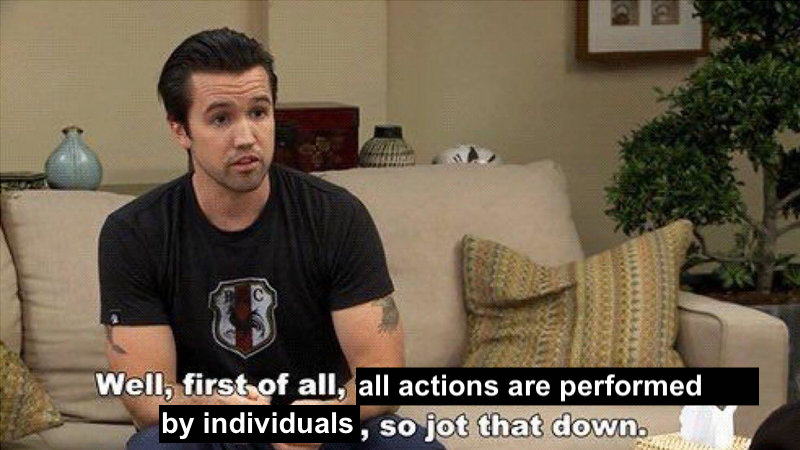
To me, it’s hardly a question at all. Guess what: all actions are performed by individuals, so yeah, individual actions matter. Corporations may seem like coldly sentient behemoths that hunger for nothing but Shareholder Value, but at the end of the day, all of their actual physical impact on the world is performed by human beings. Whether those human beings are toiling in the lithium mines, clicking “Generate” on an AI chatbot, or distributing food to their neighbors. Whether those humans were rebelling or “just following orders.” Human actions cause change.
Pitting individual against collective is also false dichotomy, as many have pointed out. You can do both. It’s also a false dichotomy because they’re not even necessarily different. Philosophically and scientifically, the boundary between the individual and the collective is incredibly debatable. We feel as if we make our own decisions, but we’re endlessly influenced by our surroundings (and the microbe cells that outnumber our own). In turn, we influence others.
It’s a straw man argument that “individual actions” like recycling (they always pick the most disappointing ones, don’t they) are always done silently, in isolation, lead to nothing, and somehow prevent you from doing anything more. Get your roommate to start adding their food scraps to your compost bucket: congrats, you’ve done a Collective Action (TM)! Then get a group of neighbors to start composting together: even better! Then help friends in other neighborhoods to start their own composting collectives: incredible, call the press! But it all started with your humble little individual compost bucket. Somebody’s gotta be the trendsetter.
In a sense, collective action is just a bunch of people doing individual actions at once, like voting for a candidate, withholding their labor/money, or rushing into the Bastille. It’s not fair to compare what one person can achieve in one moment with what hundreds or millions can achieve in years or decades. It’s like comparing your entire body to one of your cells.
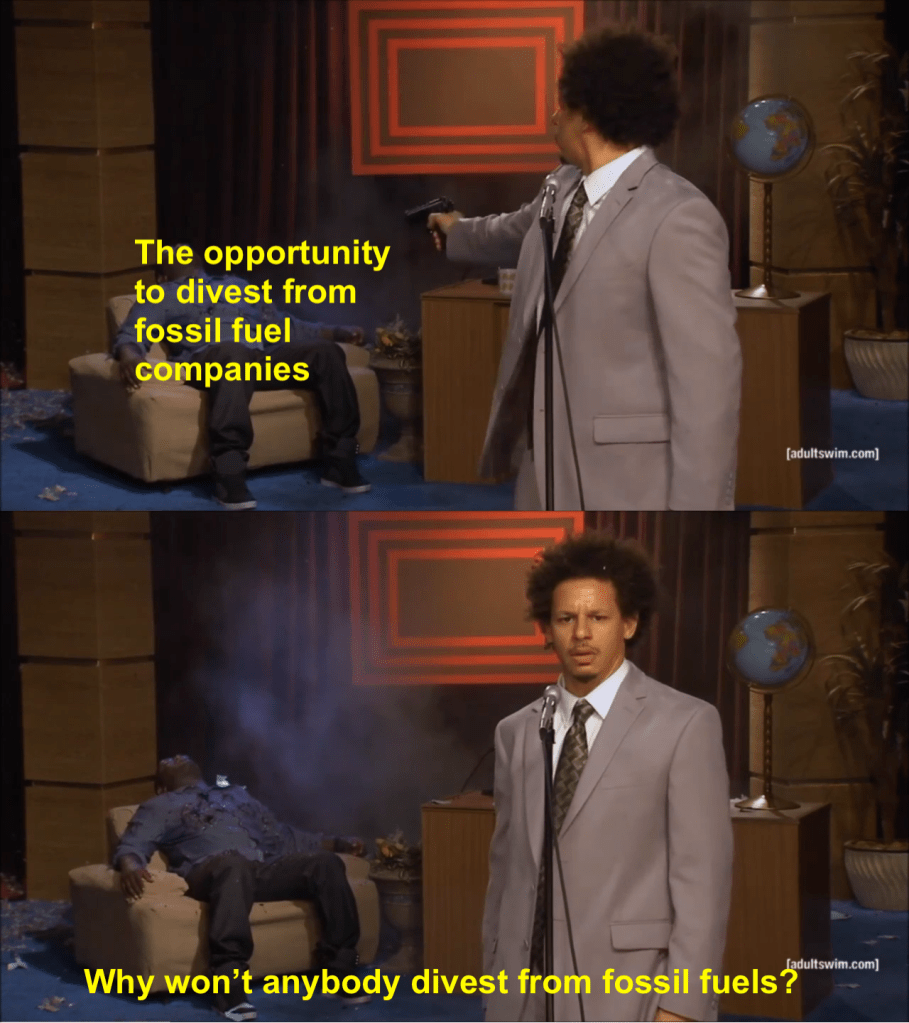
If I may snark a little, sometimes I feel like collective action has become such a atrophied muscle in today’s individualistic society that people forget the “action” part. I hear a lot of calling for collective action that seems to say: If we all shout loudly in a group, the things we want will somehow just happen. What they may forget is that once this hypothetical majority support is garnered, enacting that change still requires actual, often physical, work. That everyone will be involved in. And could start practicing right now. Chop chop.
When people genuinely ask whether individual action makes a difference in the world, I think they mean something slightly different. Because the answer is obviously yes, but that doesn’t solve the underlying emotional distress. What I actually hear in that question, often, is: “I want to do something that matters, but I feel tiny and powerless in this big scary world. What do I do?”
I’m glad you asked. Let me present my five-step process I just came up with. You can do it right now.
How To Do Something That Matters
Step one is to accept that the world is indeed big and scary, and it’s normal and correct to feel that you are very small in it.
Step two is to realize that you either do something about the problems, with your fallible human powers, or you don’t. There isn’t a third option where if we all wait long enough, you or anybody will get granted magic powers to fix everything.
Step three is to realize that you’ve already decided to act or not. You’re deciding right now. And you’re going to decide in one second. And the next. And the next. This is accepting that the present is all we have, and each moment is a new chance to decide how you’ll live.
Step four is to realize that what you do is already affecting people. The coworker you said “Good morning” to. The service worker you genuinely thanked. The friends that you check in on. The small business you purchased from. That piece of fast fashion you chucked that washes up at a village beach in Ghana years later.
Step five is to realize that the silver lining to your limited abilities is your limited perception: you’re probably capable of living a happier and more beneficial1 life than you can even imagine. You just need to let yourself try.
“But like, what do I actually do?”
Oh I’m sorry, I didn’t tell you what exactly to do to feel better about the concerning state of the world. I’m sure that’s what you wanted from me, to tell you what to do, because there isn’t enough of that on the Internet already.
I have two suggestions.
My first suggestion is to look for the people who are passionately helping the world. Who spends their free time volunteering? Who’s started their own organization for the sake of public benefit? Help them. Be around them. You’ll naturally look for people with similar interests, but its okay if you don’t feel equally as passionate about their exact action. These social environments naturally give forth inspiration, self-discovery, and opportunities. You’re helping them, but they’re also helping you. Tap into the power of collective by putting yourself in one! But you’ll have to individually choose to do that yourself. Put it into your calendar. Show up. Be brave.
“When I was a boy and I would see scary things in the news, my mother would say to me, “Look for the helpers. You will always find people who are helping.”
-Fred Rogers, aka “Mister Rogers”
My other suggestion is to just try to do things better, and ignore the voice that tells you that your life has no importance. You know whose voice that is? Who wants you to believe that change is futile? People who profit off the status quo and thus, would like it to stay the same.
The commonly recited story is that British Petroleum (BP) popularized the concept of individual responsibility (carbon footprints) as a PR scheme to make you forget about the power of corporations like BP. (Thanks, Mark Kaufman for writing that viral 2020 article. Less sarcastic thanks to Lloyd Alter for his response).
That may have been their angle, but don’t throw the baby out with the bathwater, goddamn. I firmly believe that doing the small things is a bridge to banding together to doing bigger things (which, again, is frequently just doing small things together).
I like to think that BP’s expensive consultants pushed the carbon footprint partially because they thought that nobody would actually want to reduce their consumption. Let’s show em’. And we’ll go after fossil fuel companies for all the extra evil stuff they did.
You want a conspiracy theory? I’ll give you a fun one. Remember that idea of the atrophied muscle of collective action? I think the BP story has been amplified by people who know that you won’t get all the way to collective action without the baby steps of practicing change on your own. They want to burn that bridge of little actions, so you ultimately do nothing at all.
Maybe they’re the Big Bad guys. Maybe they’re just ordinary Joe crabs in a bucket: they feel guilty about doing nothing, but if they keep you down with them in the guilt bucket, at least they won’t feel guilty and alone.
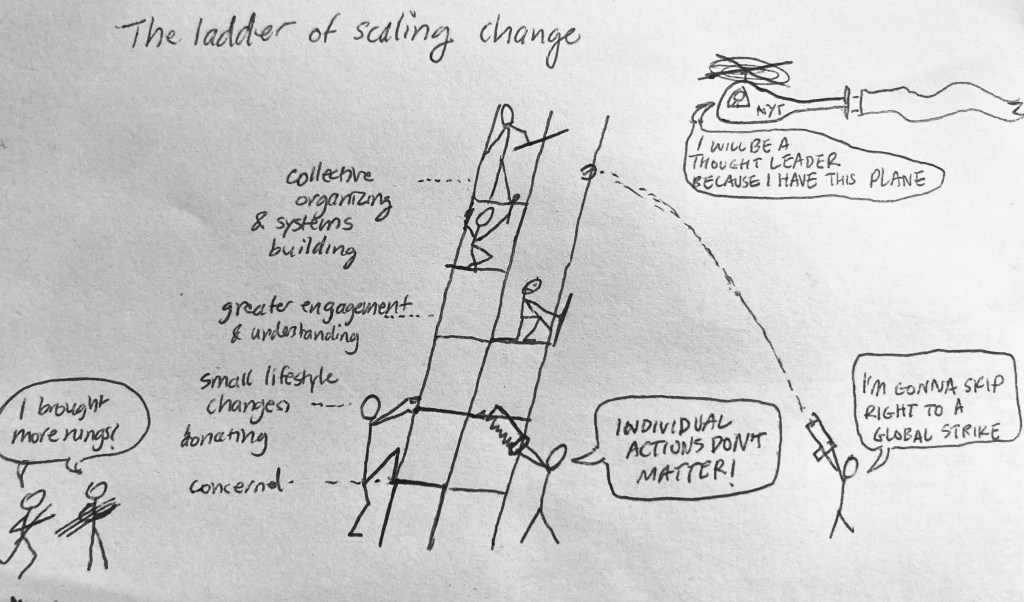
Ok, enough of that now. Whatever theories you do or don’t subscribe to, don’t fall prey to inaction. Get on that bridge! Bring a friend, and an extra rung (Still deciding between bridge and ladder here.)
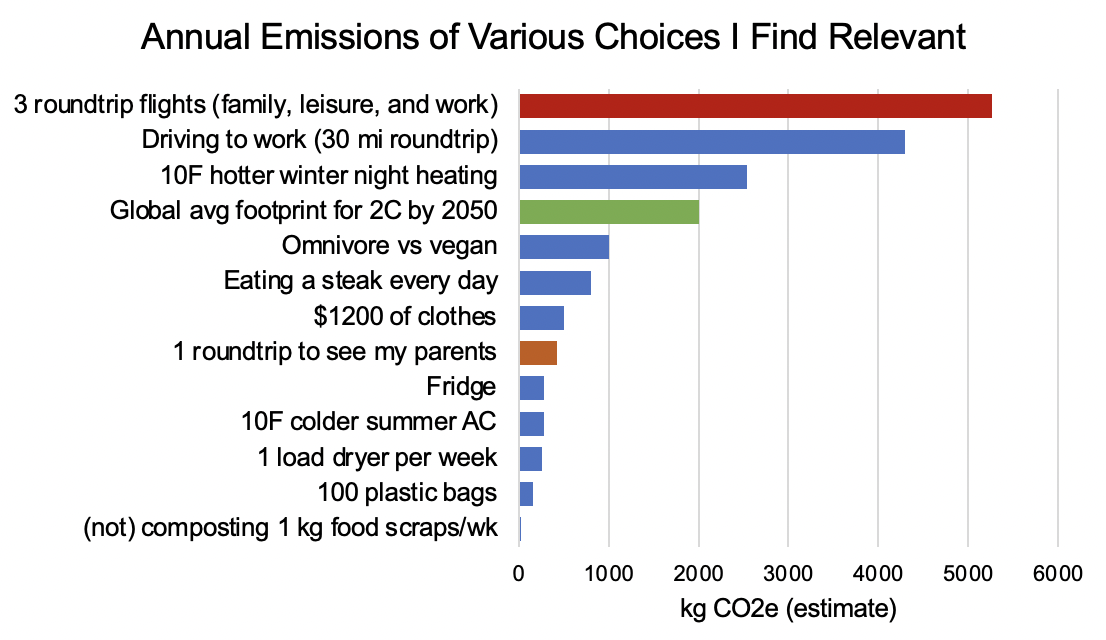
Start with one thing at a time. Ride a bike or walk instead of driving. Learn to cook a favorite meal, plant-based. Move some of your investments. Replace an airplane vacation with a regional train one. Talk to people who are doing the same. Heck, even use a carbon footprint calculator to pick a place to start. View yourself as an exciting work in progress.
In my experience, the support I receive for my sustainability actions is basically universal. Not one person has been rude about it. On the other hand, multiple people have told me they chose to act in some way because of what I did.
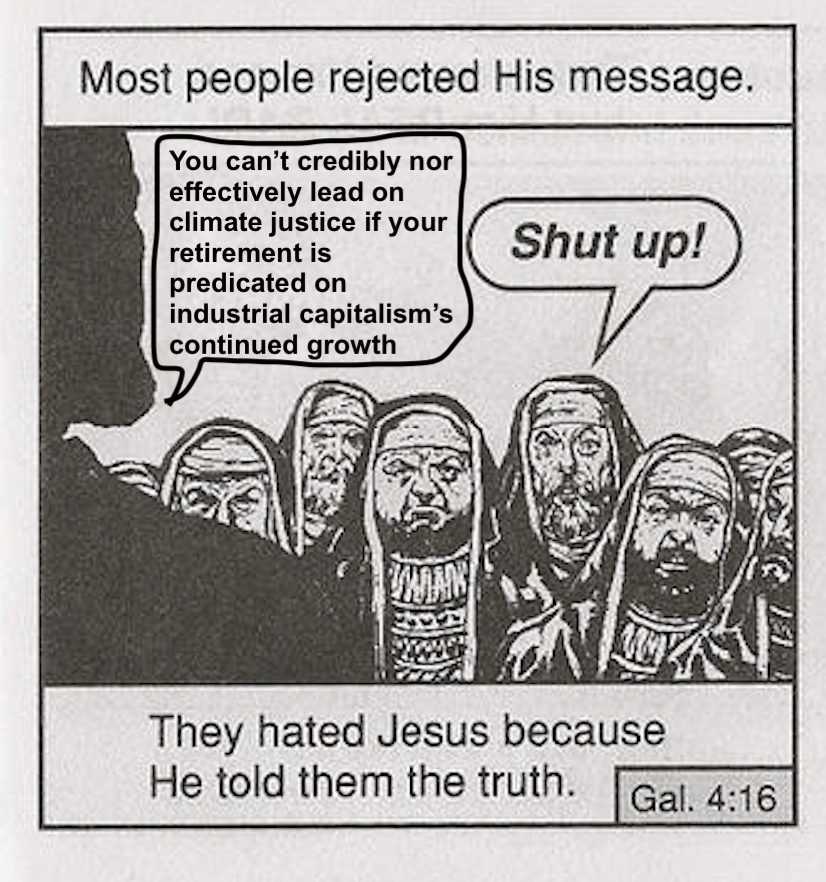
Hegemonies HATE him! This one weird trick upsets the status quo
Here’s a trick: you can reframe any action you take as a collective action if you think about all the people around the world doing the same thing, and all the people who’ve helped you, consciously or not, decide to take that action. Like mettā meditation.
You’re not alone. And at the end of the day, wouldn’t you rather die as a member of Team We Put Up A Good Fight rather than Team I Felt Anxious, Repressed It, Then Died?
POSTSCRIPT: If you’re a fellow young person looking for more concrete ideas of legit sustainability careers, I might have something for you. An unreleased piece of writing tentatively titled “Emily’s Totally Unfiltered Guide to Finding a Career That’s Actually Good for the World.” Message me for a copy.
- In 2021 I wrote a dense summary of a dense paper that’s about how feeling good helps us do good things, and how doing good things helps us feel good. If you’re into that. https://evoiding.com/2021/10/29/pro-environmental-behavior-self-determination-theory/ ↩︎
Discover more from evoiding
Subscribe to get the latest posts sent to your email.
 evoiding